



.png?lmsauth=a2231502242ea549bba8086239b67748837f8beb)
In order to install septic systems (onsite wastewater systems) in the province of Alberta, an individual must do their training through an approved training provider and then apply for their Certificate of Competency through the Government of Alberta, Municipal Affairs.
COWTI has been a provincial training provider since 2022 when we were approved to deliver the training for the 2021 update of the Standard of Practice. The SOP is the code that governs the rules and regulations of septic systems in Alberta. You can download the latest version of the SOP by clicking here.
In February 2026, our full training program for onsite wastewater practitioners was approved. Take our course today and apply for your Certificate of Competency when you're done!
The online program is split into 3 phases, allowing you to pay your fees in stages as you progress through the course. See the Fee Structure below.
Our training materials are living documents -- as the Standard of Practice is updated, any new requirements, new approved technologies, etc. will be reflected here. This assures you will always have up to date, relevant learning materials on hand. Program enrollment provides you lifelong access to the educational materials.
.jpg?lmsauth=259e32fecb7dc83a4486331f61a5e7467f4d3f0f)
- Unit 1 - Training Overview and Regulatory Framework
Learn how legislation and safety codes work together to frame the onsite wastewater industry in Alberta. - Unit 2 - Wastewater and Volume
Find out what wastewater is composed of, volume and flow rates. - Unit 3 - Wastewater Strength & Loading
Learn about sewage strength as well as linear and hydraulic loading.
- Unit 4 - Interaction of Soil and Effluent
The key to treating sewage is the movement of effluent through soil. Find out how soil does it! - Unit 5 - Site Evaluation
Learn how to assess a site for proper OWTS design installation. The exam for this unit includes a simulated homeowner interview and desktop investigation. - Unit 6 - Initial Wastewater Treatment - Tank Infrastructure
Find out about septic tanks, dosing tanks, equalization tanks and lift stations.
- Unit 7 - Initial Wastewater Treatment - Advanced Treatment
This unit covers package plants, sand filters and recirculating gravel filters. - Unit 8 - Effluent Distribution
Learn about appropriate dosing of wastewater into the soil to achieve adequate treatment and system performance. - Unit 9 - End Soil Treatment Systems - Specialized Soil Treatment Options
In this large 3 part unit, learn to design subsurface treatment fields, treatment mounds and LFH at-grade systems.
You will complete a full system design of each system type upon completion of the online material, submitted to and reviewed by the technical instructors. - Unit 10 - Unconventional Treatment Systems
This unit covers open discharge, subsurface irrigation, privies and lagoons. You will complete one design of an open discharge system during the course of this unit.
- Day 1 - Soil profiling 2 test pits and practice texturing of soils; visit our Soil Training Facility to complete your soil competency assessment.
- Day 2 - Practice system design details, examine real components like pumps, tanks, lateral design and orifice sizing. Hands-on assessment using real materials. Complete your in-person soil treatment design assessment in the afternoon.
- Day 3 - Building and testing mock scenarios of effluent distribution systems, float settings, and dose volumes.
- Phase 1 & 2 are $1500 each.
- Phase 3 is $1750.
- The 3 day practical training component costs $750, including lunch and snacks on all 3 days as well as a complimentary toolkit.
- Total cost of our program is $5500 - paid in installments as you move through the phases, with no additional taxes or fees.
- You will have lifelong access to the learning materials online as well as 1:1 access to industry experts throughout your training journey.
Payments are processed via secure Interac e-transfer. Call us today to find out more and get started!
Certified Septic System Installer Training – Alberta
Tip: Click a question to expand the answer.
Below are sample visuals and videos from COWTI’s training spaces and learning resources.
.png?lmsauth=54d0131ca4878887cdb2ba0d77e9c7dc3abd0d75)
The COWTI team has a year-round, heated field training shop outside Fort Saskatchewan, Alberta. This space is used to facilitate hands-on skills development for onsite wastewater practitioners, including activities that go hand-in-hand with the online component of the Full Training Program for Certified Installers in Alberta (CoC).
COWTI has access to a year-round Soils Training Facility near Westlock, Alberta. You will not have to wait until the summer months, as is the case with other training programs. Do your training during off-season months so once the construction season starts, you are ready to go! Learners will apply the theory of soil assessment to a soil wall: identify soil horizons, assess texture, determine soil structure and soil grade, then use these details to create a system design for a practice site.
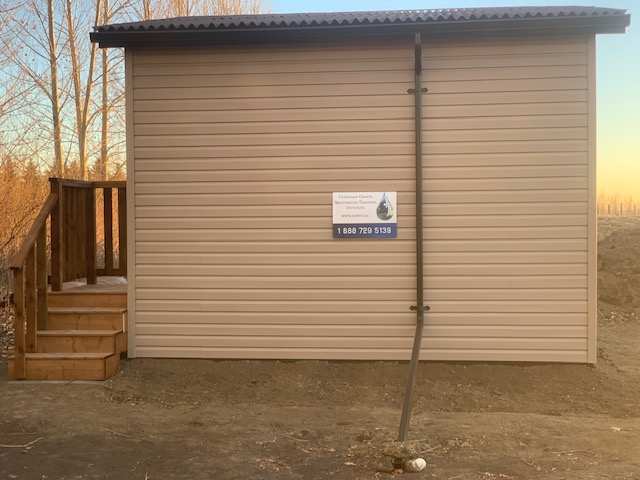
North Side of the Soils Training Facility
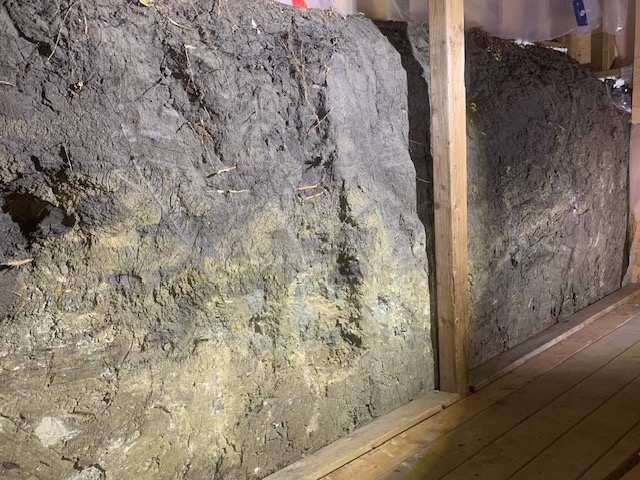
Bottom level of STF facility with platform for soil analysis
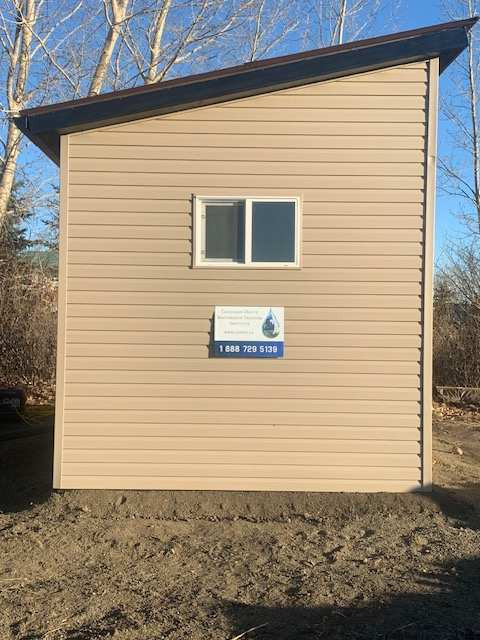
West side of Soils Training Facility
COWTI has been working with animators to bring septic systems to life for learners. Check out a sample animation below:
We welcome learners of all ages, abilities, cultural backgrounds, and outlooks on life. Give us a call to start your training journey today!
1-888-729-5139